

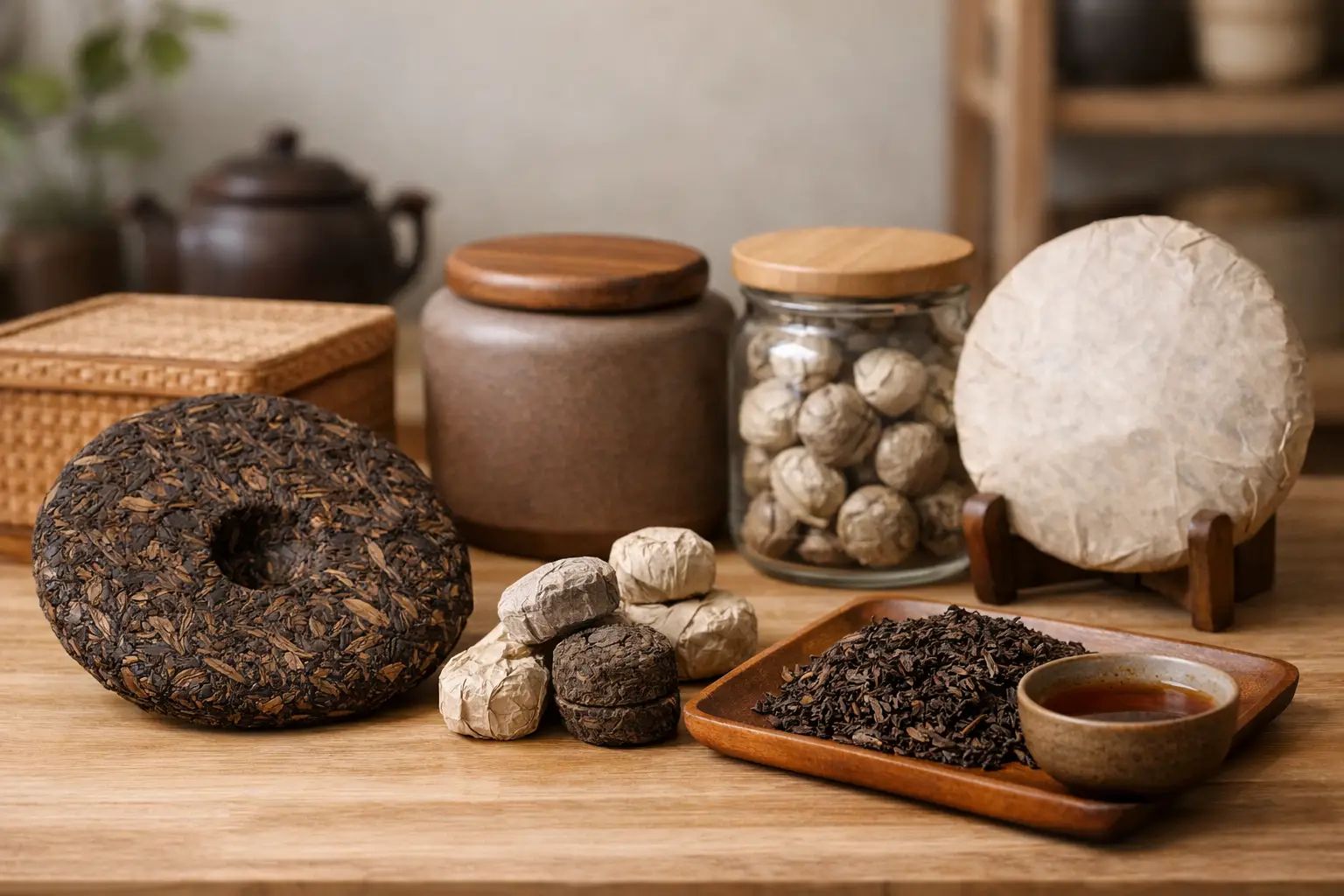

A Practical Guide to Puer Tea Storage at Home
A good puer cake can sit quietly for years, then surprise you with a rounder, deeper cup than it gave when new. A bad storage setup can do the opposite: flatten its aroma, make it taste stale, or leave you worrying about mold. This guide to puer tea storage is for drinkers who want to protect their tea without turning a room in their home into an expensive aging project.
For most people, the aim is simple: keep puer stable, clean, and away from extremes. You do not need to chase a mythical “perfect” storage number. You do need to understand what your tea is exposed to every day.
What Puer Tea Needs to Age Well
Puer is not like green tea, which is usually best kept tightly sealed and consumed fresh. Puer changes gradually after pressing, particularly raw puer, often called sheng. Air, moisture, temperature, and surrounding aromas all shape that change.
Ripe puer, or shou, also benefits from thoughtful storage, though the goal is often more about preserving a clean, mellow profile and allowing any earthy fermentation notes to settle. A ripe cake does not need aggressive aging conditions to become enjoyable. In fact, pushing humidity too high is a quick way to create problems rather than improvement.
The practical target is a clean environment with moderate humidity, mild airflow, and consistent temperature. Think less about making tea “age fast” and more about giving it a safe place to develop at its own pace.
The Main Risks in Malaysian and Singapore Homes
Malaysia and Singapore are naturally warm and humid, which can be favorable for puer compared with a very dry home. But our climate comes with a catch: ambient humidity can climb too high, especially during wet weather, in poorly ventilated rooms, or inside a cabinet against an exterior wall.
High humidity does not automatically mean mold. Still, when tea is stored in a closed, damp space with little air movement, the risk rises. A cake that feels wet, has visible fuzzy growth, or smells sour, musty, or like a damp cupboard needs attention. Do not assume every unusual smell is “aged character.” Good aged puer can smell woody, herbal, camphor-like, dried-fruity, or earthy. It should not smell moldy.
Heat is another issue. A cupboard that gets direct afternoon sun or sits beside a kitchen appliance may experience sharp temperature swings. Constant warmth can speed up changes, but it can also make aroma fade and storage conditions harder to control. A shaded interior cabinet is usually a better choice.
Air-conditioning deserves a mention too. It can dry tea significantly if the tea sits directly in the path of cool air. The room does not have to be unairconditioned, but avoid placing cakes beside an air vent or in a spot that shifts from very dry to very humid every day.
Guide to Puer Tea Storage: Choose the Right Container
The ideal container setup protects your tea from humidity spikes, foreign odors, and structural moisture while keeping leaves stable for either near-term drinking or long-term resting.
Primary Protection: Specialized Puer Ziplock Sealed Bags
Traditional advice often recommended leaving cakes in simple paper wrappers inside a cardboard box. In tropical Southeast Asian climates, however, porous paper wrappers leave tea leaves defenseless against ambient humidity surges, airborne kitchen oils, and strong household scents.
Modern puer storage relies on specialized puer tea ziplock sealed bags (multi-layer barrier or food-grade foil pouches):
- Complete odor and moisture barrier: Specialized barrier bags prevent external humidity and household smells from entering, protecting your investment from spoiling during prolonged humid spells.
- Preserving internal aromatics: Sealing the cake locks in its natural essential oils and floral, fruity, or woody aromas, preventing the tea from tasting flat, hollow, or dried out over time.
- For loose puer and broken cakes: Use resealable foil barrier bags or double-lidded, non-reactive tea tins that carry zero residual metallic or manufacturing odors.
Secondary Outer Storage: Boxes, Chests, and Bins
Once individual cakes are secured in specialized sealed bags, place them inside a secondary container for thermal insulation and physical protection:
- Clean cardboard boxes: Plain, fragrance-free cardboard acts as a mild thermal buffer. Only use brand-new or clean boxes that have never held food, perfumed items, or scented detergents.
- Food-safe plastic bins or coolers: Heavy-duty, food-grade polypropylene bins or insulated ice chests offer an extra layer of defense against dust, pests, and ambient humidity. Check them every couple of months to inspect the tea and ensure conditions remain fresh.
- Unglazed clay or wooden chests: Unglazed purple clay (zisha) jars or odor-free wooden chests work well for daily-drinking cakes that have already been broken apart to air out before brewing.
Critical Placement Rules: Floors, Walls, and Sunlight
Where you place your storage setup matters as much as the container itself. Improper positioning can destroy tea regardless of the container quality:
- Never place containers directly on floors: Tile, concrete, and stone floors conduct ground moisture and attract condensation. Moisture pools beneath boxes on the floor, rotting cardboard and inducing mold. Always elevate your storage on shelves, racks, or furniture at least several inches off the ground.
- Keep containers away from walls: Exterior walls absorb outdoor moisture and “sweat” during heavy rain. They also conduct tropical heat from the outside sun. Maintain a gap of at least 10 to 15 centimeters between your storage containers and any wall.
- Eliminate sunlight exposure: Direct and indirect ultraviolet (UV) light penetrates transparent containers, bleaches tea leaves, breaks down beneficial catechins, and produces an irreversible, sour, oxidized off-flavor. Store tea in dark, opaque containers inside shaded closets or cabinets.
- Maintain strict odor isolation: Puer leaf matrix behaves like a sponge. Never store puer in or near kitchens, bathrooms, laundry areas, shoe cabinets, or near coffee, spices, incense, scented candles, or cleaning supplies.
Humidity: Moderate Beats Maximum
Many tea drinkers aim for roughly 60 to 70 percent relative humidity for home puer storage. This is a useful reference range, not a commandment. A small digital hygrometer in your storage area will tell you far more than guessing based on the weather.
If humidity is consistently above 75 percent, increase caution. Check for condensation, damp cardboard, a wet-feeling wrapper, and any change in aroma. Move the tea to a drier room, improve ventilation around the storage area, or use air-conditioning or a dehumidifier for the room if needed. Do not place a dehumidifier directly beside the tea and dry it out aggressively.
If your storage is very dry for long periods, the tea may seem muted and its wrapper can become brittle. In that case, first look for a less air-conditioned location. Avoid quick fixes such as putting a bowl of water inside a sealed container without monitoring it. That can create a localized damp zone and encourage mold. Slow, stable adjustment is safer than forced humidity.
Keep Raw and Ripe Puer Separate When You Can
Raw and ripe puer have different aromatic personalities. A young raw puer may be floral, bitter, fruity, or smoky, while ripe puer can be earthy, date-like, woody, or cocoa-like. Storing them together is not a disaster, especially in small collections, but close contact over a long time can blur their aromas.
If you have the space, use separate boxes or separate sections of a cabinet. It is also sensible to separate strongly smoky raw puer from delicate floral cakes. This is not about being precious. It is simply easier to preserve the character you paid for.
How Often Should You Check Your Tea?
You do not need to unwrap every cake each week. Too much handling causes its own disturbance. For a small home collection, inspect the storage area every few weeks and give each cake a closer look every two to three months.
Check the hygrometer, smell the air inside the box or cabinet, and look at the wrappers. If everything smells clean and looks dry, leave the tea alone. If you notice an off smell, isolate the affected cake before it transfers aroma to the rest of your collection.
When buying more puer, taste before committing to a large stack of cakes. Storage cannot turn tea you dislike into your dream tea. It can refine a good tea, soften rough edges, and add depth over time, but it will not erase weak material or poor processing. That is why samples are useful, especially if you are still learning whether you prefer young raw, aged raw, or ripe puer.
A Simple Setup Is Usually the Best Setup
For most homes, a shaded cabinet or shelf, a clean cardboard box, original wrappers, and a basic hygrometer are enough to begin. Keep the tea away from odors, direct sun, and damp corners. Then be patient.
There is no prize for making puer age fastest. The better question is whether your tea still smells clean, brews well, and remains a pleasure to drink. Give it a stable home, taste it from time to time, and let your own palate tell you how the journey is going.